
Call-out or first hour: $80–$180
What most Sydney plumbers charge to attend and start work. Ask for it on the phone. Anyone who will not name it has answered a different question.
Hot water that has given up, a mixer that drips, a toilet that runs, a leak showing on a wall, a gas appliance that needs connecting properly. All of it is licensed work, all of it is what we do, and you get the number before anyone picks up a tool.
Most people meet a plumber at the worst possible moment, which gives the trade a reputation for emergencies it only half deserves. The larger part of the work is planned and unglamorous: a hot water system reaching the end of its life, taps and mixers that have started to weep, toilets that run, a gas appliance that needs connecting properly, and the rough-in behind every bathroom and kitchen renovation.
We work across Camperdown, Newtown, Glebe, Chippendale and the wider Inner West, which matters more for the small jobs than the large ones. A tap washer is not worth a ninety minute drive to anybody, and that is exactly how suburbs get quietly neglected by operators covering the whole city from one depot.
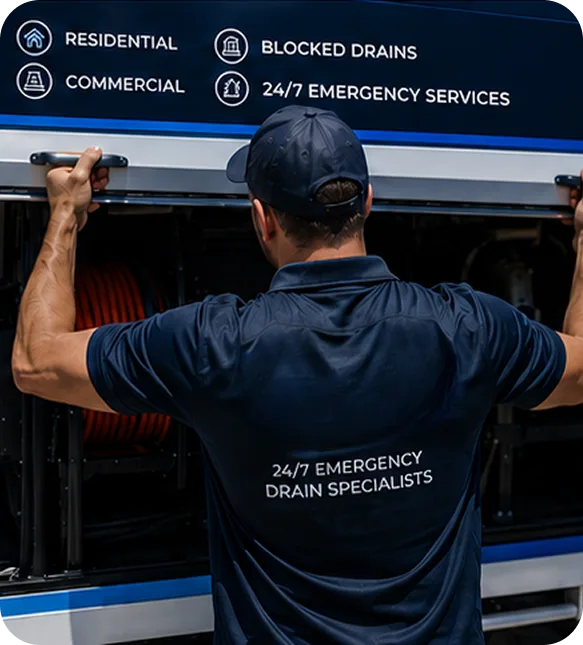

Apartment work is often less about the plumbing and more about coordination: getting into the unit below to see where it is landing, booking a lift, giving notice for water shutdown to a whole line of lots.
A plumber who does this regularly plans for it. If we need to isolate a riser, we will tell you what notice the building requires and work to it, because turning up and shutting water off to twelve apartments unannounced is how a small job becomes a building-wide complaint.
An older house is rarely on one generation of plumbing. It is on four, each added by someone solving that decade's problem, and the joins between them are where most faults sit. Lead to galvanised to copper to PEX, with a bathroom relocated somewhere along the way.
That is why a proper first visit to a period home is slower than it looks like it should be. Understanding what is actually there prevents the repair that fixes one thing and disturbs two others.
Most homes around Camperdown have a low grate outside, usually near a back step or beside the laundry wall, that nobody thinks about until the day it runs. It is set deliberately below the lowest fixture inside so that when something downstream stops taking water, it spills into the garden rather than through your floor.
In heavy rain the dense, low-lying streets between Parramatta Road and Missenden Road push runoff through old pits that choke and back up.
If yours is buried under mulch, pavers or a new deck, that protection is gone and nobody will notice until the overflow finds the hallway instead. Finding it and keeping it clear is a five minute job that has saved a lot of carpet.
The moment worth planning for is a renovation. New fixtures, a second bathroom or a kitchen moved to the other side of the house all put more through a line that was sized and laid for a smaller household.
Many of Camperdown’s Victorian terraces still run original earthenware pipework that cracks and lets roots and debris in as it ages underground.
A camera run before the tiler starts costs a fraction of what it costs afterwards, and it is the difference between finding a sagging section while the slab is open and finding it through a finished floor. If you are getting quotes for a bathroom, get this done in the same fortnight.
The most common apartment call is not from the lot with the fault. It is from the one underneath, looking at a stain. Water tracks along beams and slab falls, so the visible damage is frequently nowhere near the source.
This is where non-destructive detection matters most, because the alternative is opening ceilings on a guess in a home that is not the one with the problem. Find it first, then open exactly one thing.
A downpour is a free diagnostic if you watch during it. Where water pools, which downpipe backs up at the head, whether the gully runs, whether anything smells afterwards: those four observations narrow a stormwater fault down more than an hour of guessing on a dry day.
Write down what you saw and when. A plumber arriving to a dry, tidy yard is working blind otherwise, and the difference between a clean-out and a repair is usually decided by whether it happens every time or happened once.
What most Sydney plumbers charge to attend and start work. Ask for it on the phone. Anyone who will not name it has answered a different question.
The standard weekday range once the first hour is done. After-hours and weekends sit higher, because someone is out of bed for it.
Tap and mixer replacements, toilet repairs, a failed valve, swapping tired flexible hoses. Attendance plus the work plus minor parts.
Elements, thermostats, valves and anodes on a tank with life left in it. A full replacement is quoted separately and depends on the unit.
Renovation rough-in, gas line work, anything needing excavation or a second pair of hands. You get a written figure before it starts.
Indicative Sydney ranges for 2026. Your job gets a fixed price before work starts. Figures here are indicative of the 2026 Sydney market rather than a quote from us, you get your own number as a fixed price before any work starts.

A plumber takes the call, not a message service. Describing the symptom is usually enough for us to tell you what it probably is, what it will likely cost, and whether it genuinely needs someone today.
The crew nearest Camperdown takes the job, with the common failure points already stocked on the van so most work finishes in the one visit.
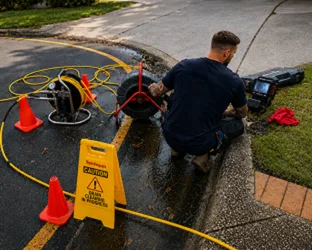
We look at it properly, show you what has actually failed, and put a fixed number in front of you. Nothing starts until you have agreed to it.

The job is completed, tested and cleaned up, and you get the compliance paperwork where the work calls for it.
Describe it and we will tell you whether it is a plumber, a gasfitter or neither, and whether it is worth doing today or booking for the week.
Straight answers on licences, cost, urgency and what happens on the day.

Phone is quickest. The form works just as well, and it reaches the crew covering Camperdown rather than a national call centre.

Leave your details and our local Camperdown team will call you back fast.